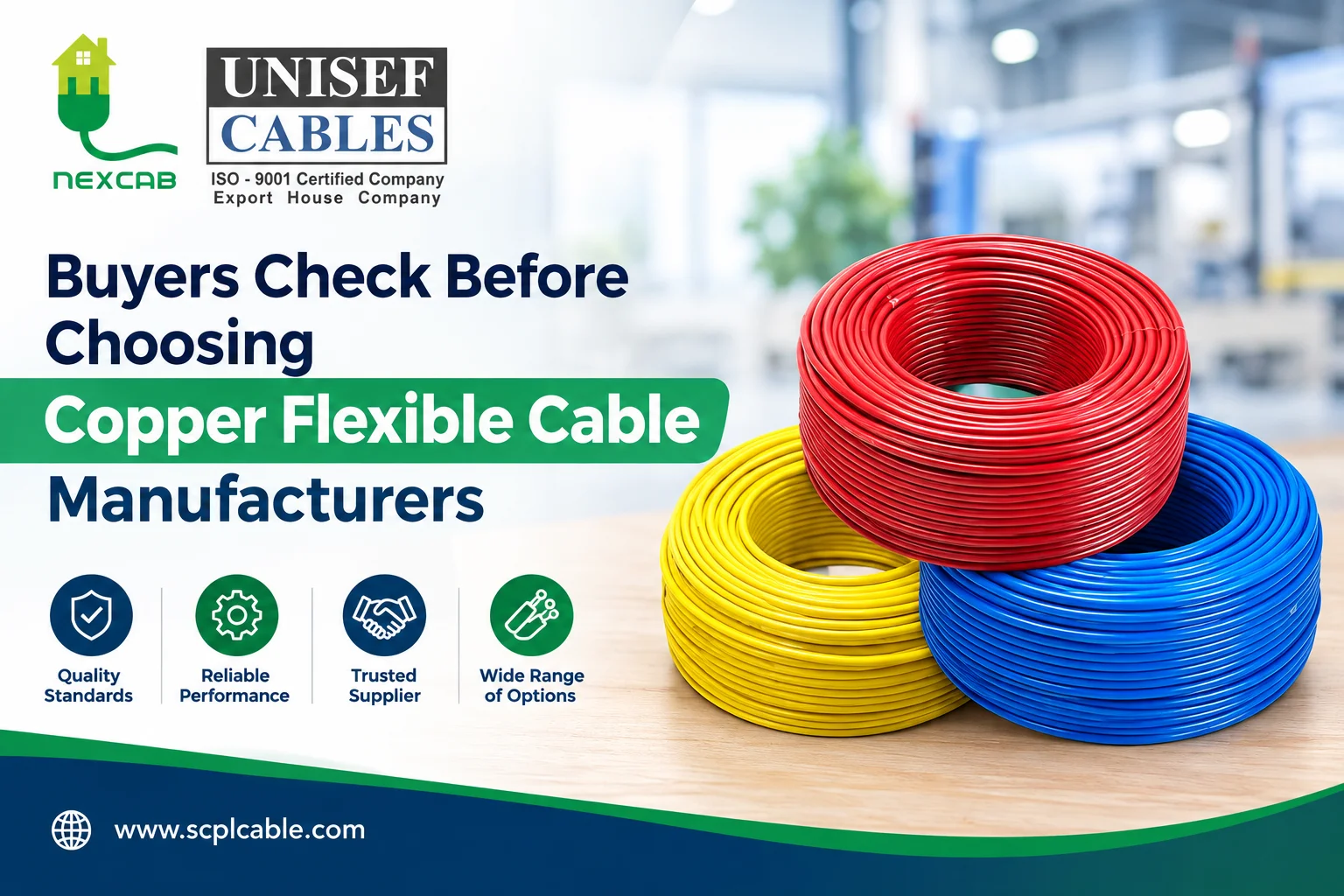
When buying flexible cable, there are several factors to consider, including the quality of the conductor, insulation, flexibility, and manufacturing consistency. However, people are often found considering the price instead of these factors, and that is where they fail. As one of the leading copper flexible cable manufacturers, we always advise buying these cables according to the application requirements. In this blog, we are sharing a few important factors that every buyer must check to ensure that they are choosing the right flexible wire from the right brand.
Check the Copper Conductor Quality
Buyers must always check the quality of the copper cable to know if the manufacturer is using suitable high-conductivity copper and whether the conductor construction is appropriate for flexible applications. For flexible connections, Class 5 conductors are highly preferred due to their excellent flexibility. Also ensure that these conductors meet BIS standards and are quality tested before their final use.
Verify Applicable Standards and Testing
Compliance with ISO standards is another important check to consider when comparing flexible cable manufacturers. Depending on the cable type and application, relevant Indian Standards may cover conductor construction, insulation, voltage rating, dimensions, and testing. Like, IS 694 covers PVC-insulated unsheathed and sheathed cables and cords with rigid and flexible conductors, whereas IS 8130 covers conductors for insulated electrical cables and flexible cords. Buyers must ask for applicable test reports, certificates, and technical documentation before finalizing a supplier.
Match the Cable to the Application
A flexible cable designed for control-panel connections may have different requirements from one used in machinery, appliances, or other moving electrical connections. The buyer should therefore communicate the operating conditions clearly. It is advised to consider required conductor size and number of cores, rated voltage, expected current load, frequency of movement or bending, installation environment, temperature conditions, and required insulation & sheath type. The cable should be selected according to the actual operating conditions rather than simply choosing a larger or smaller size based on price.
Examine Insulation and Sheath Quality
Copper alone does not determine cable performance. Insulation protects the conductor and helps the cable withstand the conditions in which it operates. Buyers should check the insulation material, thickness, temperature suitability, and mechanical characteristics specified by the manufacturer. For PVC cables, BIS requirements include specifications concerning insulation material and thickness. Reliable copper flexible cable manufacturers should provide consistent construction across production batches and clear information about the cables’ intended working conditions.
Consider Technical Support and Supply Capability
The right manufacturer should be able to assist with cable selection instead of simply quoting a product. Discuss the application, required specifications, and quantity before ordering. For businesses sourcing cables regularly, factors such as production capacity, delivery schedules, custom requirements, and after-sales communication can also affect procurement efficiency.
Conclusion
When looking for the right copper flexible cable manufacturers, we recommend evaluating them based on all the above-stated factors. It is advised to check the conductor quality, applicable standards, insulation, flexibility, testing, manufacturing consistency and application suitability should all form part of the buying decision. At SCPL Cables, we focus on providing the best cable solutions with attention to product requirements and application needs. As one of the top flexible cable manufacturers in India, we consider buyers specific requirements and help them get the best flexible cables according to their requirements.
FAQs – Frequently Asked Questions
Start with conductor quality, applicable standards, cable construction, voltage rating, flexibility and testing documentation. These provide a better basis for comparison than price alone.
Conductor construction affects flexibility and electrical performance. Class 5 conductors are used for flexible connections where greater flexibility is required.
Yes, relevant test reports and technical documents help buyers verify whether the supplied cable meets the required specifications and applicable standards.
No, cable selection depends on factors such as voltage, current, movement, temperature, installation conditions and insulation requirements.